

By Aniey Obot
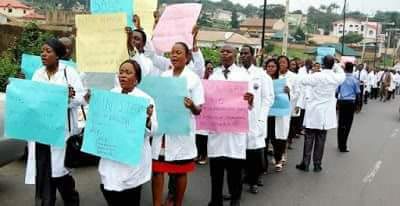
The Nigerian health sector has been tumultuous for some times now. It is either members of the Nigerian Medical Association (NMA) are downing tools using its affiliate, the National Association of Resident Doctors (NARD) as her war horse or the members of the Joint Health Sector Unions (JOHESU) are on strike paralyzing health services in the country. Presently, health services in the country have been paralyzed for over three weeks now due to the ongoing strike by members of JOHESU, comprising all health workers aside medical practitioners.
One of the reasons JOHESU, which is a marriage of necessity and convenience of all the registered trade unions in the Nigerian health sector, is on strike, is the wage system in the sector. They are pushing for an equitable and fair wage system, describing the present wage system as a sort of slavery. The NMA which is the umbrella body for all medical and dental practitioners in the country, is seriously pressurizing the government not to grant JOHESU’s demand because according to her, JOHESU is asking for pay parity with doctors. According to NMA, this is against international best practices. This was echoed by the Ministers for Health and Labour who incidentally are members of the NMA.
Parity, Equity and Slavery! These words have been on the front burner of discussions within the sector. NMA is rejecting parity, JOHESU is denouncing slavery and asking for Equity. To understand the discussion, these words must be defined. We take the definitions from dictionary.com. Parity is defined as the state or condition of being equal, especially as regards status or pay. Equity is defined as the quality of being fair and impartial. Slavery is defined as a condition of having to work very hard without proper remuneration or appreciation.
The story of the wage system in the Nigerian health sector is a very long and complex one. To avoid boredom, I will concentrate on the evolution of the present salary structures in the sector namely CONMESS and CONHESS. In 2009, the federal government approved CONMESS for medical and dental practitioners alias medical doctors and CONHESS for other professionals and workers in the sector. These salary structures are gauged against the popular grade levels in the civil service. The basic tenets for these salary structures are that, every worker on the same grade level should earn the same basic salary and common allowances now called consolidated salary. Peculiar allowances should be paid to different professional groups as approved.
Different professions have different entry level according to their years of training and the work they do. Any future adjustment must be done on both tables. These they say is to maintain an equitable pay relativity (this is a topic for another day). The NMA and JOHESU where actually unhappy with the new salary structures, because of the pay gap. NMA claimed it was too narrow, and JOHESU claimed it was too wide, they accepted the salary structures and forged ahead.
Surprisingly, in 2014, against the tenets of the 2009 agreement, the federal government approved an upward adjustment of CONMESS to the satisfaction of NMA without an equivalent upward adjustment CONHESS.
The real bone of contention here is the issue of pay gap between the medical doctors and other health professionals. To appreciate the cries of JOHESU, an analysis of the wage system in the Nigerian health sector is necessary. For the analysis, a nurse will be used to represent an average health professional.
If a post NYSC medical doctor without any postgraduate certification or experience and a double qualified nurse (a registered nurse who has a post graduate training as a midwife) are employed the same day into the federal civil service, the doctor will get employed into the service on CONMESS 3 which is Grade level 13, while the nurse gets employed in the service on CONHESS 7, which is Grade level 8. At the end of the month, the salary of the nurse will be less than 30% that of the doctor. The nurse will need to work for about 15 years to get to grade level 13 which is the entry level for a post NYSC medical doctor. After these 15 years, the nurse’s salary is still less than the salary of a newly employed doctor. To earn the same as a newly employed medical doctor, the nurse will have to work for about 21 years, assuming the nurse passes all the promotion interviews!
During the course of their services to Nigeria, both of them may be given in service specialist training. On successful completion of such trainings, the medical doctor will be promoted to grade level 15 and called a consultant. With this new position comes a new allowance called specialist allowance, while the nurse will be posted to the area of need of the newly acquired skill without any promotion or specialist allowance. The nurse will keep on working waiting for her next promotion interview before he/she can enjoy any promotion if he/she passes the interview.
One of the reasons JOHESU is on strike is to narrow this pay gap and maintain the 2009 relativity, all they are asking for is for people on the grade level to earn the same consolidated pay (basic salary plus general allowances) whether you are a doctor or a nurse.
Earning the same consolidated pay is not the same thing as earning the same salary if you are on the same grade level, each professional or group of professionals earn allowances peculiar to them.
Remember it takes a nurse about 15 years to be on the same level with a newly employed doctor. JOHESU is simply saying let an average health professional after spending 15 years in the service earn the same consolidated pay with a newly employed doctor. This does not make the health professional earn the same with the newly employed doctor, as the doctor’s other allowances especially call duty allowance is far more than that of the health professional (for those who earn it).Thus, even after spending 15 years to get to the same level as a newly employed doctor, the average health professional will not even earn as much as a newly employed doctor when the demands of JOHESU are met.
It is so surprising that the NMA and both ministers of health and labour are calling this demand of JOHESU an attempt to achieve pay parity with the doctors. It is evident that they either don’t understand the meaning of pay parity or they don’t understand the relationship between the two salary structures in our health sector.
I will not want to believe that they are mischievous, as only mischievous people will go on national television and dish out what they know are lies to win sympathy from the public.
Now the onus is on the public to judge if JOHESU’s description of their ordeal in the hands of our health managers as slavery, and their demands for an equitable, fair and just wage system in the health sector is tantamount to requesting for pay parity with doctors!
 daybreakonline.news.blog