

Hunger is the worst enemy of any dieter or health-conscious person.
Healthy hunger is a signal that your body needs some kind of fuel to function properly. Here, fuel means food. If you’ve missed a meal, then being hungry is normal.
But if you’ve eaten a meal and you feel too hungry before your next meal, do not make the mistake of taking this problem lightly. Feeling hungry all the time is not a good sign.
A variety of medical reasons can be behind your unnecessary hunger pangs. In such cases, you need to take care of it as soon as possible to prevent more serious health consequences.
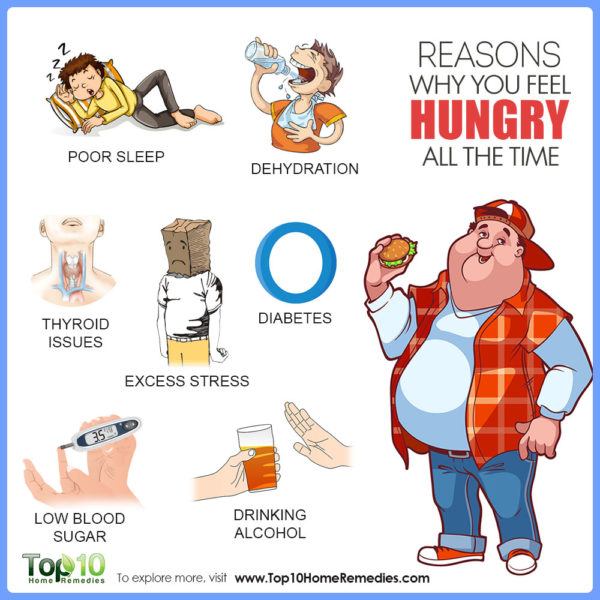
Here are the top 10 reasons why you feel hungry all the time.
1. Poor Sleep
Restless sleepers and those who have difficulty getting 7 to 8 hours of sleep daily can feel hungry all the time.
A night of poor sleep can affect two hormones linked to appetite. It can cause a surging level of ghrelin, a hormone that stimulates appetite, as well as a decreased level of leptin, a hormone that causes feelings of fullness.

A 2013 study published in Nature Communications found that insufficient sleep may result in choosing foods most capable of triggering weight gain.
In a 2016 study published in Sleep, researchers explained that the increase in circulating endocannabinoid levels could be a mechanism by which recurrent sleep restriction results in excessive food intake, particularly in the form of snacks, despite minimal increases in energy need.
Along with feeling hungry, other symptoms of sleep deprivation include a change in mood, clumsiness, not staying alert, increase in accidents, trouble staying awake during the day and weight gain, to name a few.
Aim for 7 to 8 hours of sleep a night. By doing so, you’ll get your energy level and hunger hormones back on track.
2. Excess Stress
During fight or flight mode, the body’s stress hormone cortisol rises. This hormone convinces your body to eat. In fact, cortisol makes you crave sugar and high-fat foods.
Eating more during stress does not reduce negative emotions or anxieties, but rather it triggers the need to eat more and leads to weight gain and more health issues.

A 2001 study published in Psychoneuroendocrinology reports that a psycho-physiological response to stress may influence subsequent eating behavior. Over time, these alterations could impact both weight and health.
A 2008 study by the UT Southwestern Medical Center reports that some people who are stressed or depressed overeat as the hunger hormone ghrelin rises in their bodies.
Other symptoms related to stress include anger, fatigue, headaches, sleep problems, upset stomach and lots more.
To combat stress, exercise and meditate. Even listening to music can help control your stress level.
3. Thyroid Issues
Excessive hunger is also associated with hyperthyroidism, a common disease affecting the thyroid. If your thyroid is overactive, it means you are suffering from hyperthyroidism.

When thyroid hormone levels are too high, the body’s vital functions speed up and you burn energy faster than intended. As your body speeds up metabolically, it increases hunger as a result.
When suffering from hyperthyroidism, you don’t gain weight even after eating too much. Instead, you lose weight since you burn calories at a much faster rate.
Besides a change in appetite and an enlarged thyroid gland, other signs of hyperthyroidism include a fast pulse rate, bulging eyes, feeling nervous, excessive sweating, muscle weakness and feeling thirsty even after drinking water.
4. Low Blood Sugar
Low blood sugar, or hypoglycemia, means the glucose in your body has dropped to a very low level. Low blood sugar can make you hungry.
The brain needs energy in order to function and glucose is accepted by the brain as fuel. So when the sugar in your bloodstream goes down, so does your brainpower. The brain then starts giving signals that your body needs fuel, hence you start feeling hungry.

For people suffering from low blood sugar, a new term “hangry” is used, which means the state of being hungry is making you angry.
In a 2014 study published in the Proceedings of the National Academy of Sciences, researchers found that married couples get increasingly angry and mean toward one another when their blood sugar levels are low.
Apart from hunger, other symptoms of low blood sugar include anxiety, pale skin, sweating, tingling around the mouth and a general feeling of being unwell.
Low blood sugar is a common concern for people with diabetes, but people with other health issues like hepatitis, kidney disorders, and problems with the adrenal or pituitary glands can also experience this problem.
5. Diabetes
Both Type 1 and Type 2 diabetes can cause frequent hunger pangs.

In normal circumstances, the body turns the sugar in food into fuel called glucose. But if you have diabetes, the sugar from the food you eat may not enter your tissues to provide energy. This can cause your muscles and other tissues to make you crave more food.
In addition to a spike in your appetite, other symptoms of diabetes include extreme thirst, frequent urination, unexplained weight loss, blurry vision, cuts and bruises that take a long time to heal, a tingling sensation in the hands or feet, and constant fatigue.
Whether you have Type 1 or Type 2 diabetes, it is important to keep your blood sugar level under control or it will negatively affect different body organs.
6. Parasite Infestation
At times, excessive hunger even after eating a meal on time can be a telltale sign of a worm infestation in the intestines.

Worms, especially those like tapeworms or pinworms, can live for a long period of time without you having any knowledge about it. Worms rob the body of all essential nutrients, thus making you hungry more often than usual.
Due to a parasite infestation, one may have strong hunger pangs especially during the early morning and may also never feel satisfied or full after eating a meal.
If you are feeling hungry more often combined with weight loss, then it’s time to see your doctor.
7. Premenstrual Syndrome (PMS)
Women who are about to have their period can also notice an increase in appetite.
The ongoing hormonal changes in the body that occur during the second half of the menstrual cycle and go away within 1 to 2 days after the period starts can make you feel hungry all the time.
Also, the basal body temperature goes up during this time, which further affects your appetite.
Apart from feeling hungry, women with premenstrual syndrome (PMS) also tend to feel tired and dehydrated. Other symptoms include bloating, headaches, breast tenderness, mood swings, fatigue and sleep problems.
To manage food cravings before your periods, eat protein-rich foods with each meal and minimize your intake of processed and refined carbohydrates and sugars.
8. Pregnancy
Many moms-to-be experience an increase in appetite, which is not a bad thing. In fact, an increase in appetite helps ensure that the baby gets enough nutrients to grow.
It’s normal to gain about 4 to 6 pounds during the first trimester, then 1 pound per week during the second and third trimesters.

However, an increased appetite during pregnancy does not give you the green light to eat anything you want. Calorie needs increase during pregnancy, but you also need to eat healthy. Eat wholesome foods, green vegetables, fresh fruits and nuts.
Avoid processed and refined foods and too many sugary treats.
Eating nutrient-rich whole foods will keep you and your growing baby healthy. It will also make you less likely to overeat.
9. Dehydration
When the body is chronically dehydrated, you can also feel hungry. In fact, many people actually mistake hunger for thirst.

Thirst occurs when your body needs water. However, you may confuse the signal for thirst with that of hunger because the same part of the brain (hypothalamus) sends signals for both. If the body is dehydrated, the brain sends a signal that you need to consume something when you actually need liquid intake.
Water is also needed for the cells to use the nutrients in the food that you eat. Lack of nutrient availability causes your body to crave more food.
When you are dehydrated, apart from feeling hungry, you will also experience symptoms like constipation, dry skin, a sluggish feeling, low energy, dizziness, dry eyes and decreased urine output.
The next time you feel hungry, drink a glass or two of water and your hunger pangs may go away.
10. Drinking Alcohol
A glass of wine or beer with dinner daily can also be a reason why you feel hungry all the time.
Drinking alcohol can lead to an increase in the hormone ghrelin, which triggers a feeling of hunger even if your stomach is full. Also, it has been found that people tend to eat more while drinking and, moreover, the increased feeling of hunger can carry on to subsequent meals.

Also, alcohol intake dehydrates you, which in turn can trick you into thinking you need food when your body actually needs water.
A recent 2017 study published in Nature Communications reports that alcohol switches the brain into starvation mode, increasing hunger and appetite.
It is always better to give up alcohol to control your hunger pangs. It will also help you lose weight and sleep better.
Other Possible Reasons You are Hungry All the Time
Eating at a fast pace can make you overeat or feel hungry soon after finishing a meal. It is recommended to eat your food slowly, savoring each bite and enjoying the meal.
Skipping your breakfast backfires on you and you start feeling hungry more often.
Eating more processed foods like white bread, cookies and even salad dressings can spike your blood sugar and leave you feeling even hungrier than before.
Loading up on starchy carbohydrates will also make you crave more food.
Lean protein and healthy fats keep hunger pangs at bay. If you are not eating them regularly, your stomach will not remain full for long and you will want to eat more frequently.
Diet soda has a negative impact on appetite and can trigger hunger.
Chewing gum, even sugar-free gum, can increase feelings of hunger.
Genetic disorders, such as Prader-Willi syndrome (PWS), are also sometimes responsible for excessive hunger. Similarly, a chromosomal abnormality can cause excessive hunger.
Eating disorders like bulimia can cause excessive hunger.
Mental health conditions like bipolar disorder and manic depression can increase your desire for food enormously.
Certain drugs can increase your appetite. In particular, antidepressants and corticosteroids can make you feel hungry even after a normal-sized meal.
 daybreakonline.news.blog