

Before you step any further, take a look at these 4 facts from my own life —
When I was 11 years old, Enid Blyton and Roald Dahl ruled my book cupboard. It opened up my mind to expecting the unexpected. I wanted to make others feel what I did as a child. What happened soon after?
A : I took up writing in school. I wanted to be a creative.
When I was a 14-year-old, my days revolved around Harry Potter books and Dan Brown fiction. I was one of the biggest Potter-fanatics you’d ever find. The result?
A : I became an amazing creative writer at school. I won state level and national level awards for my writing. J.K Rowling and Dan Brown unlocked my creative potential.
When I was 21 years old, I started medical school. My creative writing habit died down. It was replaced with the more concrete form of scientific writing, based on rational explainations. My days were jammed with massive reading lists. What happened?
A : I hit one of the biggest creative writing blocks I’d ever faced in my life.
I didn’t write anything creative for 5 years straight. I had free time to write. It wasn’t the lack of free time that killed my creative spirit.
When my country’s medical universities went on a nation-wide boycott in January 2017, I was on a 10-month hiatus from my studies. My reading rapidly drifted away from scientific writing to self-help titles.
I also started reading stories written by other creatives, online. The result?
A : My self-help stories were overwhelming hits onMedium. My creative writing spirit was reignited.
Is There A Common Conclusion Here?

Photo by Aziz Acharki on Unsplash
“Books are a uniquely portable magic.”
― Stephen King.
I’ve seen plenty of people attempt to re-invent the wheel of how to write. It’s done every single day. There are plenty of pro tips, many of which you’ve probably come across as well — write better headlines, tag better, structure your story better.. and heaps of other tips.
Don’t get me wrong. These tips are useful. But let’s face facts. They don’t help you write. They help you organize your writing. Understand the subtle difference.
Your Reading Is Reflected In Your Writing
Remember my 4 life facts? It proves this point perfectly. Hence, rather than reading a thousand op-eds on how to write better, it is more productive to first learn how to read better.
So let’s get started.
1. Know Your Reading Purpose
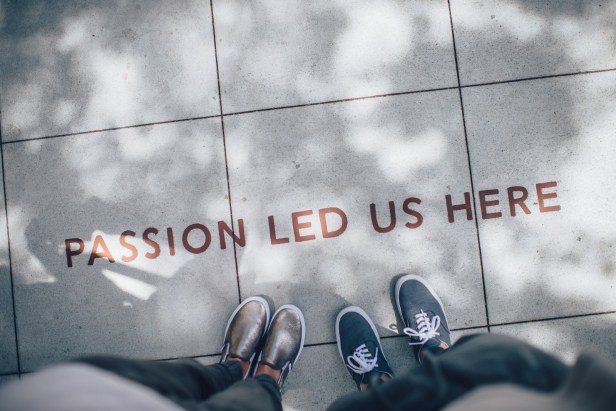
Photo by Ian Schneider on Unsplash
This will also reflect your writing purpose.
Whether it’s reading for work or reading for relaxation, start with recalling the reason(s) as to why you are sitting down with a book in your hands. This makes reading fun, when you know exactly where you are and where you’re headed to.
It will also predetermine how you will read any book.
Knowing your motives as a reader is the surefire way of realising your motives as a writer.
2. Keep A Refined Reading List

Photo by Redd Angelo on Unsplash
With the advent of the internet, writers resort to much plagiarised and copy-pasted content, that serves little academic, creative or spiritual purpose.
When you’re researching on any topic, whether it be writing about ‘The historic significance of the comma’ or a millennial topic like ‘Can cocaine boost your creativity?’, keeping a refined reading list is of utmost importance.
Follow these tips to achieve this goal —
Try reading printed material. The internet has glaring limitations when it comes to refined text. Visit a bookshop, library or download an ebook app, and keep a healthy number of titles close to yourself. Some of these may even become life manuals.Follow trusted resources. If you’re reading online, keep a trusted list of websites for any topic that you wish to research. Always visit these for up-to-date information. If you’re clueless of which resources to access, seek the advice of a professional in the respective field.Keep your online following limited. Any reading platform allows you to follow other writers. Keep this number south of 200. Make it a point to have the best of the best, the cream of the crop in your following list.
3. Question-based Reading
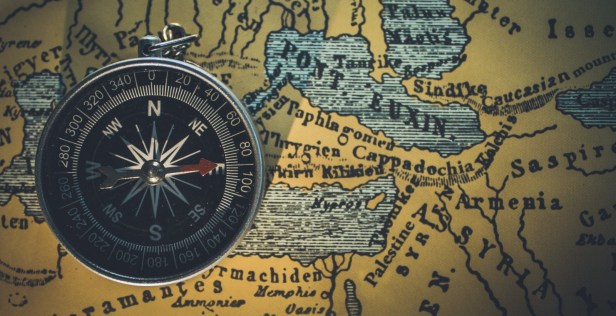
Photo by Himesh Kumar Behera on Unsplash
Whether it’s scientific writing, op-ed writing or fiction writing, the approach is always key. It is your road-map — an A-to-B-to-C pathway to reaching your ultimate goal.
To make this process easier, build your reading around questions.
These can be text-book questions or self-made questions. They are yours to answer during your reading journey. Knowing these in the back of your mind will laser-focus your reading priorities.
Imagine you’re a fiction writer trying to build a plot. You’ve a piece of fiction in your hand. Keep these questions in mind before starting to read :
Does this book reflect my own story’s plot?If so, who are the characters that best fit my plot?Does this book resemble any part of my life?Are there parts of my own life I can incorporate into my plot?Am I in the plot too? If so, which character?
4. Break Down The Book
Photo by Igor Miske on Unsplash
“Veni, vidi, vici. (I came, I saw, I conquered.)” — Julius Caesar
The same man who said these words successfully did so by dividing his enemies apart; hence the famous phrase “divide and conquer”.
It will give you an idea how to build your own story or op-ed. Humans thrive on order and organisation.
Make a mind map of the different chapters, subtopics or subplots discussed underneath the larger title. This gives you an eagle’s view of the text, and maps out your journey ahead. It eases your mind and makes the process enjoyable.Strip off all glamour words from the text and see the subject in its nakedness. People search for real substance. Once you know what the meat of the story is, add the glamour words to give colour.
5. Pick Your Speed
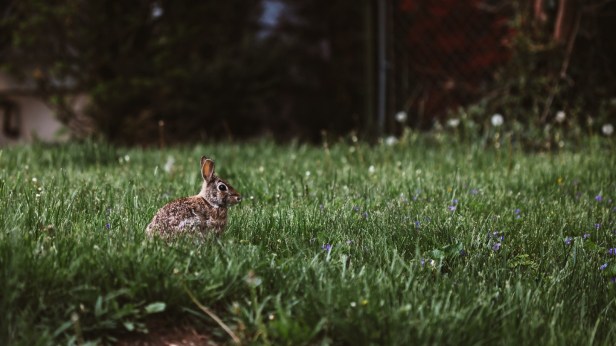
Photo by Peter Lloyd on Unsplash
Does every reader need to be a speed-reader to be an amazing reader? The short answer is: No.
The difference between a speed-reader and a slow-reader is exemplified by the story of the tortoise and the hare.
The hare moves as fast as possible, hands a blur, pages flipping away, paragraphs and chapters forgotten. As a result, entire chapters may need to be revisited.
The tortoise, on the other hand, proceeds deliberately, no wasted movements, reading thrice, absorbing once. No step needs revisiting, everything moves in a precise orderly fashion.
If the hare makes too many minor missteps and has to keep adjusting, the tortoise wins. If the tortoise spends too much time planning each step, the hare wins.
It is a delicate balance between the two that makes a perfect reader.
6. Set The Stage
Photo by Paul Green on Unsplash
Getting background information about any book makes the journey that much more interesting. Anyone would love to carry around a travel guide when visiting any foreign country. The same applies to exploring any new book.
Try out these tips to widen your perspective on any topic :
Know the historical setting. Keep an encyclopaedia close, and read about the historical period of the book and the author.Read the author’s bio. Get into the author’s two shoes. Get a glimpse into his personal life and see the book from his point-of-view.Read about the origin of the book itself. See what led the author to write the book. Get insight into the trials and tribulations the author faced in his writing process.Read the synopsis of the book. It may give you insight into a summary of the book, and the gist of the entire text.Know the historical impact of the book. Revisit the cultural, scientific, creative and social impact that the book had on the masses.
7. Write And Annotate

Photo by Jazmin Quaynor on Unsplash
Whether it’s a novel or a school textbook, writing and annotation play a major role in knowledge accumulation.
Write and Highlight. Always keep a pencil or a pen close, underline important phrases and paragraphs. Keep multicoloured highlight pens in your reading toolkit, and keep a colour code for different types of phrases. These quotes can be used in your own stories to make them more compelling.Read deliberately. Briefly, pause after each paragraph. Reflect on the text. Read between the lines, and understand the deeper meanings of metaphors, examples and cryptic text that the author uses to keep the reader compelled.Write in the corners. Make use of the space on either side of the text and write down your own perspective about phrases that hit home with you.
8. Train Your Inner Wordsmith
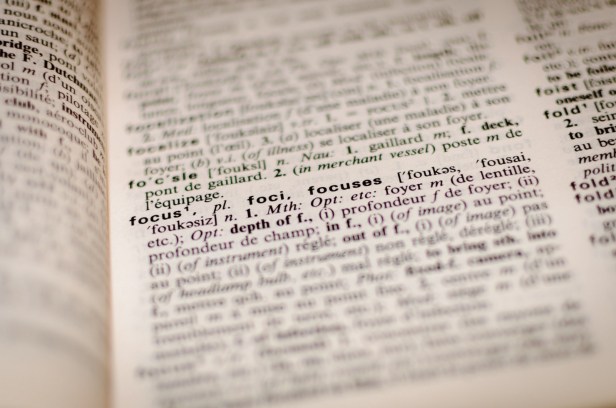
Photo by Romain Vignes on Unsplash
When reading a challenging text, stumbling upon a heap of foreign words is a norm. The key is not to be scared or turned off by it.
Keep a notebook close. Note down any new word you stumble upon. Embrace foreign lands with the same confidence as a Columbus or an Ibn-Battuta.The dictionary is your friend. Elaborate meanings of new words and keep a list to read later. This is the tried-and-true method of expanding one’s own vocabulary.Think of definitions for any new words. When I used to read books as a kid, I constructed meanings for new words and kept on reading the text without pause. I looked them up in a dictionary later. This helped solidify the meanings such words better than if I memorised them directly from a dictionary.
9. Stay Oriented

Photo by Wil Stewart on Unsplash
Staying oriented means being present in time, place and person.
a. Choose the best time to read.
Different people have different times of optimal focus.
If you’re an early-riser, keep your reading as the first thing to do after waking up. Make use of the consolidation phase of sleep, to remember content better.If you’re an evening wolf, reading during the evenings will be the best, when your power of analysis is at its peak.If you’re a late night owl, reading just before sleep will help reduce insomnia and give you a sound sleep.
b. Choose the best place to read.
Some readers like me get distracted in the midst of noise —in which case, a silent park bench will be the best choice. Some others thrive on distraction — these people love a public location like a coffee shop or the commute.
Know which type of person you are. Choose a suitable reading location and make it your crib. Take a flask of coffee or juice along with your book of choice.
c. Keep a tunnel vision.
Focus is always key. Some readers struggle to maintain a level of focus on the simplest of texts. If so, take mouse-bites, and operate under bursts of energy. Use the Pomodoro technique to keep your reading focus at its optimal peak. It can even be used to optimize your writing. Always know your goal, and be hellbent on getting there.
10. Get Started!
Photo by Andrew Neel on Unsplash
It’s always hard to pick up that new book and get cracking. When the going gets tough, it’s always advisable to take things one simple step at a time. Try these tips out to wipe that rust off, and get ticking on your reading list!
Pick up the easiest book. If your reading list is massive, pick up the shortest title. Every book — large or small — counts as one title. Get started on the shortest!Choose something that interests you. Getting started on a boring reading list is a massive drag, whichever way you look at it. To counter this natural reflex, pick a topic that intrigues you. Curiosity is always an amazing tool to build reading interest.Join a book club. Having a group of people around you who are searching for inspiration might just be what you need to get your own engine started.Get that library membership. Libraries are curated archives of titles, a sea of books that you can get lost in. You’ll find amazing titles that’ll broaden your perspective on any topic and give you the best substance to write about.
 daybreakonline.news.blog